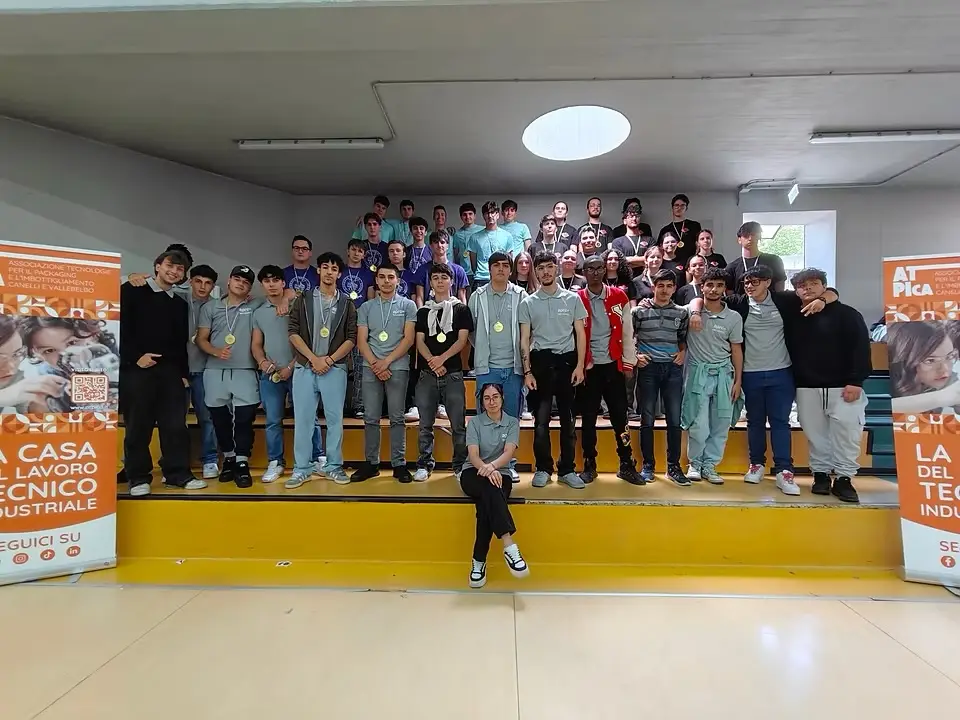
The future of industrial automation in packaging and bottling is also built at a school desk. That is the thinking behind the Robo Challenge, the competition promoted by ATPICA — the Association for Packaging and Bottling Technologies of Canelli and Valle Belbo — which puts the innovation, creativity and technical skills of the younger generation centre stage. It is an initiative Eurostar follows with particular interest, as a company in the sector and an active member of ATPICA: the quality of the technical skills available locally has always been one of the conditions for the growth of an entire manufacturing district such as the Bubble Valley.
The winning team
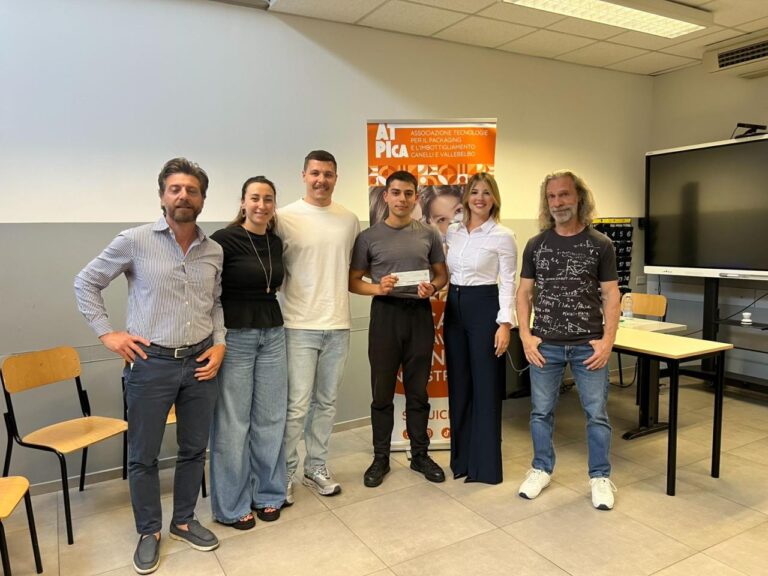
In the second edition of the Robo Challenge, first place went to the Artom–Synergix team, which stood out for the high standard of its design work, the quality of its execution and its ability to integrate advanced technological solutions into a coherent and effective project. Students from several technical schools across the area took part in the competition, developing prototypes and applications in robotics and automation: a testing ground where technical skills were combined with team spirit, problem-solving ability and an innovative outlook.
“The initiative promoted by ATPICA puts the innovation, creativity and technical skills of the younger generation centre stage.”
Why Eurostar invests in local training
Eurostar takes an active part in ATPICA, working with schools, technical institutes and training bodies to guide young people towards technical and industrial careers. For a company that has been building bottling machines in the heart of Piedmont since 1996, believing in technical education is not a symbolic gesture: it means continuing to have, in the years ahead, the technicians, programmers and design engineers able to develop the automation technologies that are already reshaping the way bottling lines are built.
Looking ahead: the Vision Robo Challenge
ATPICA has already announced the next challenge: the Vision Robo Challenge, which will introduce advanced artificial intelligence and machine vision elements into the cooperation between student and cobot, asking participants to simulate a real industrial assembly process guided by vision systems. It is a natural evolution of the path begun with the Robo Challenge, and confirms how the Canelli and Valle Belbo area continues to invest in one of the most significant challenges for the future of packaging: the ability of machines — and of the people who design them — to read and adapt to the production environment in real time.