The customer
Castello di Verrazzano is a wine estate in the heart of Chianti Classico, with over a thousand years of history on this land. The property covers around 250 hectares, 50 of them under vine, and produces between 250,000 and 300,000 bottles a year with a craft approach, overseen personally by owner Luigi Cappellini throughout the entire cycle, from vineyard to packaging. The estate’s signature grape is Sangiovese, a variety that is particularly demanding from a technical and oenological point of view.
The challenge
Verrazzano was not looking to increase production volumes, but to answer a specific need in terms of quality and organisation: combining the craftsmanship of its own method with the precision and consistency standards required by international markets — the North American market in particular — which are increasingly focused on certification and traceability.
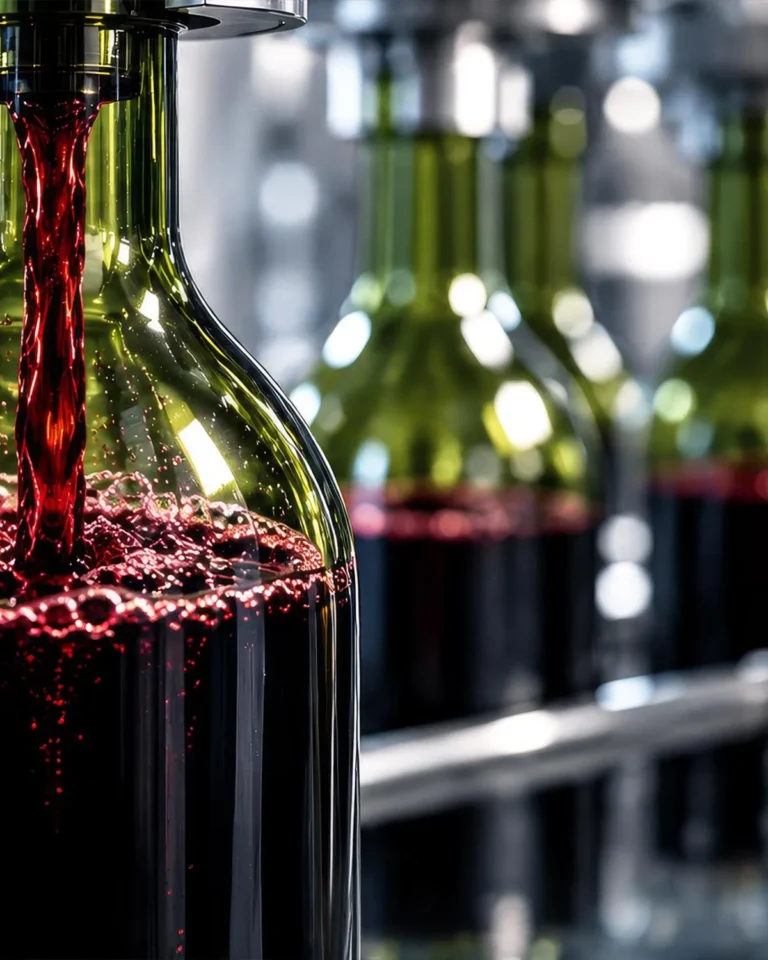
Several objectives were identified: protecting the wine’s aromatic integrity through filling with no contact with oxygen; precisely controlling sulphite dosing, in line with the estate’s organic approach; ensuring complete sanitisability; reducing water and energy waste; managing fast format changeovers between 0.5, 0.75 and 1.5 litre bottles; and fitting the new line into the spaces of a thousand-year-old winery never designed for modern machinery.
The Eurostar solution
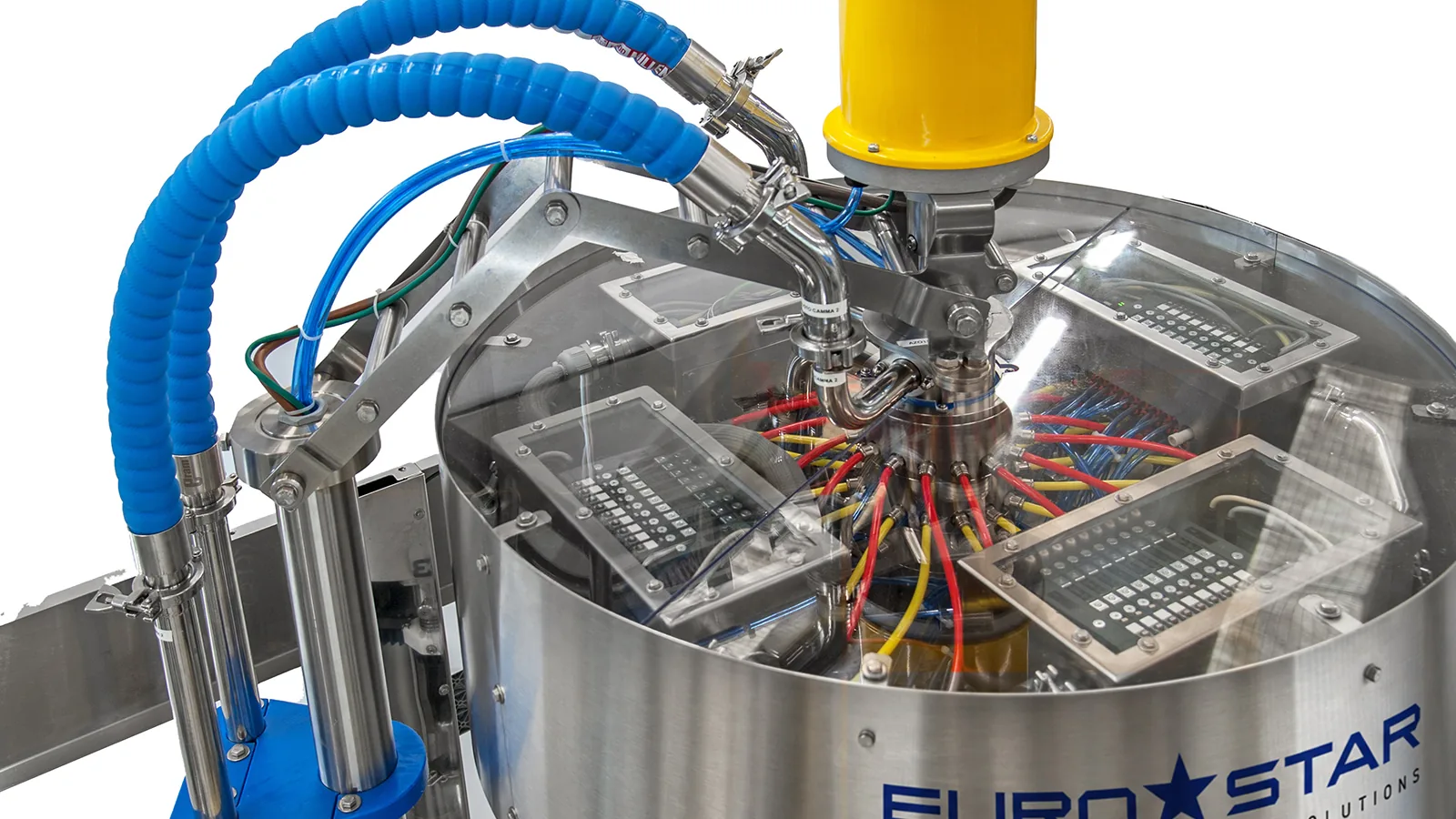
The Eurostar line installed is built around the MAXIMA EP 16/16/1R filler, with a 16-position rinsing carousel fitted with gripper clamps, a transfer system with variable-geometry star wheels and an infeed timing screw connected directly to the filling carousel.
A key element of the solution is the collection bell, which makes it possible to maintain process continuity even during the stop-and-start moments typical of a historic winery, where production flows are not as linear as in a contemporary industrial plant.
Beyond the technical parameters, two factors proved decisive for Verrazzano: the mechanical solidity of the machine and its acceptance by the operators — long-term reliability, ease of maintenance, accessibility of components and simplicity of use, in a setting where the operators themselves dismantle, reassemble and clean the line every day.
The results
- Filling with no contact between wine and oxygen, with very low sulphite levels, consistent with the estate’s organic and regenerative farming approach.
- A perceptible reduction in “bottle shock”: the wine is more stable right from the start, with better retention of its aromatic components than in the past.
- Fast, straightforward format changeovers across the bottle sizes the estate handles (0.5 L, 0.75 L, 1.5 L).
- Seamless integration of the line into a historic building, without disrupting either its architectural balance or long-established working routines.
In their words
“The choice was to stay within our own territorial boundaries, developing quality and identity rather than indiscriminately increasing volumes. The investment in the new line was not driven by higher volumes, but by a need for quality and organisation.”
Luigi Cappellini, owner of Castello di Verrazzano
“In settings with a long tradition, a machine cannot be self-referential or exist purely ‘on paper’. It has to prove reliable over time, easy to maintain, with accessible components and simple to operate.”
Luigi Cappellini, owner of Castello di Verrazzano
Source: case history originally published in the trade magazine “Imbottigliamento”, September 2026